The Art of Tempering Chocolate
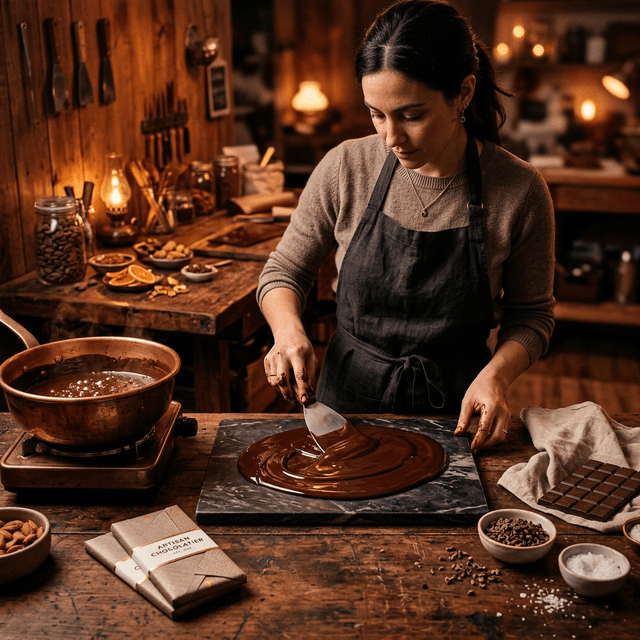
Tempering chocolate is the difference between amateur chocolate work and professional results.
Skip this step and you’ll end up with chocolate that is dull, soft, and prone to melting in your hands, often developing white streaks known as fat bloom.
When done correctly, tempered chocolate delivers a glossy finish, a sharp snap, and a smooth melt in the mouth.
Tempering isn’t decoration — it’s chemistry.
What Tempering Actually Does
Chocolate contains cocoa butter, a fat that can crystallize into several different structures.
Only one of these structures — Form V crystals — produces the qualities people expect from premium chocolate.
Properly tempered chocolate has:
- A glossy shine
- A firm texture
- A clean snap when broken
- A slow melt at body temperature
- Resistance to fat bloom (white streaks)
When chocolate melts without proper tempering, cocoa butter crystals form randomly, leading to unstable texture and appearance. Tempering controls this process, forcing the cocoa butter into its most stable crystal form.
The Three Temperatures That Matter
Chocolate tempering is simply controlled heating and cooling.
The process always follows the same sequence:
1- Melt the chocolate to eliminate existing crystal structures
2- Cool the chocolate to allow stable crystals to form
3- Reheat slightly to remove unstable crystals while keeping the stable ones
Typical Temperatures
Dark Chocolate
| Stage | Temperature |
|---|---|
| Melt | 45–50°C |
| Cool | 27–28°C |
| Working Temperature | 31–32°C |
Milk Chocolate
| Stage | Temperature |
|---|---|
| Melt | 40–45°C |
| Cool | 26–27°C |
| Working Temperature | 29–30°C |
White Chocolate
| Stage | Temperature |
|---|---|
| Melt | 38–42°C |
| Cool | 25–26°C |
| Working Temperature | 28–29°C |
If the chocolate exceeds the final working temperature, the temper is lost and the process must begin again.
The Three Main Tempering Methods
Professionals use several techniques to achieve the same stable crystal structure.
1. Seeding Method (Most Practical)
The seeding method is the easiest and most reliable technique for home kitchens and small chocolate businesses.
Steps:
1- Melt 75% of the chocolate to the melting temperature
2- Add 25% finely chopped chocolate (the seed)
3- Stir continuously until the temperature drops to the cooling stage
4- Gently reheat to the working temperature
The added chocolate contains stable crystals that guide the melted chocolate into the correct structure.
2. Tabling Method (Professional Technique)
This traditional method is widely used by pastry chefs and professional chocolatiers.
Steps:
1- Fully melt the chocolate
2- Pour two-thirds onto a marble surface
3- Spread and scrape the chocolate repeatedly using spatulas
4- Once thickened and cooled, mix it back with the remaining warm chocolate
This method produces very stable temper but requires skill and a marble work surface.
3. Mycryo Method (Modern Shortcut)
Professional kitchens sometimes use cocoa butter powder (Mycryo) to simplify tempering.
Steps:
1- Melt chocolate completely
2- Cool to 34°C
3- Add 1% Mycryo cocoa butter powder
4- Stir until the chocolate reaches its working temperature
This method is fast, precise, and reliable.
How to Check if Chocolate Is Tempered
A simple technique known as the knife test can confirm whether chocolate is properly tempered.
1- Dip the tip of a knife or spatula into the chocolate
2- Let it rest at room temperature
Properly tempered chocolate will:
- Set within 3–5 minutes
- Appear glossy
- Feel firm to the touch
If the chocolate remains sticky or dull, the temper has failed.
Common Tempering Mistakes
Water Contamination
Chocolate seizes immediately when exposed to water. Even steam from a pot can ruin melted chocolate.
Overheating
Burned chocolate cannot be recovered. Once cocoa butter separates, the texture is permanently damaged.
Poor Stirring
Crystal formation requires consistent agitation. Insufficient stirring can lead to unstable temper.
Low-Quality Chocolate
Cheap compound chocolate often contains vegetable fats instead of cocoa butter, meaning it cannot be properly tempered.
Always use real couverture chocolate.
Why Tempering Matters for Confectionery
Many chocolate creations rely on proper tempering to work correctly.
Tempered chocolate is essential for:
- - Chocolate bars
- - Bonbons and truffles
- - Chocolate shells
- - Dipped strawberries
- - Molded Easter eggs
- - Chocolate decorations
The shine, snap, and professional finish associated with premium chocolate all come from correct tempering.
Professional Tip
When making filled chocolates or molded products, maintain chocolate at its working temperature throughout the process.
Temperature fluctuations will gradually break the temper, often causing fat bloom hours later.
Professional chocolatiers often rely on tempering machines to maintain consistent temperature and constant movement.
Final Thought
Tempering chocolate may appear complex, but it ultimately comes down to temperature control and patience.
Once you understand the behavior of cocoa butter crystals, the process becomes predictable and repeatable.
Mastering this technique transforms chocolate from a simple ingredient into a precision craft.
Discover Your New Favourite
Experience the same passion and artisan level of quality in every piece of our gourmet collection.
Shop Our Collection Now